
The Tracker’s Mind
Reclaiming the Origin of Science for a World Losing Its Way

“When you track an animal, you must become the animal. Tracking is like dancing, because your body is happy—you can feel it in the dance, and then you know the hunting will be good. When you are doing these things, you are talking with God.”
— !Nqate Xqamxebe, Bushman Tracker
There is an ancient way of knowing woven into the ground beneath our feet, an intelligence older than language, older even than what we commonly call culture. It lives in the faint depressions left by hooves, paws, and bare feet; in the bent reed, the errant feather, the displaced grain of sand. It lives most vibrantly in the human being who pauses, kneels, and begins to listen with the whole body. This is the art of tracking—an art that the Bushmen never relegated to the realm of metaphor. They meant it literally: to track is to converse with the divine, to enter the interior story of another life, to feel the pulse of the world through the soles of your feet and the sensitivity of your attention.
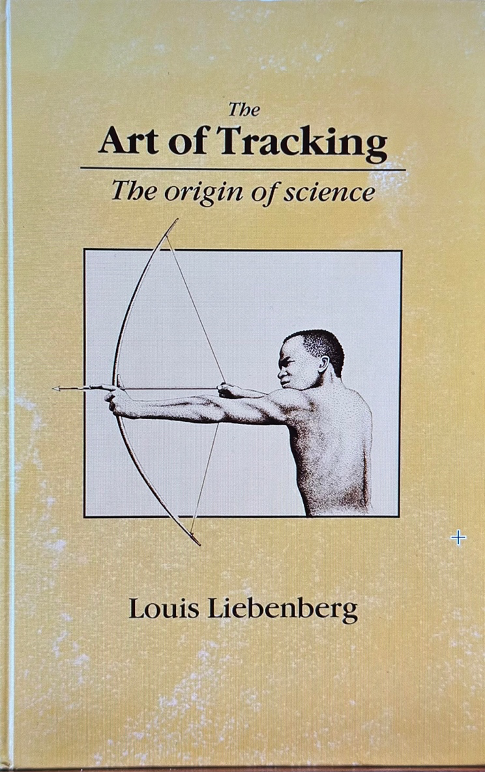
What Xqamxebe states so simply is echoed more analytically in Louis Liebenberg’s work among Kalahari hunter-gatherers. For Liebenberg, tracking is not a primitive instinct or an archaic pastime; it is the evolutionary birthplace of science itself. Long before laboratories or textbooks, the earliest humans learned to make inferences from incomplete data, to test hypotheses against shifting evidence, and to revise their understanding moment by moment as new signs appeared along the trail. Tracking requires prediction, imagination, empirical restraint, and intellectual humility. The tracker was a scientist, philosopher, storyteller, and psychologist all at once. To follow a track was to follow a mind, and in doing so, to sharpen one’s own.
What makes Liebenberg’s insight so transformative is that it does not reduce science to a set of procedures. It restores to science its original breath—curiosity, wonder, and embodied presence. It reminds us that reason began not in abstraction but in relationship, not in detachment but in intimacy with the more-than-human world. The scientific method, stripped to its bones, is nothing more than the practiced attentiveness of a person who can read the land and imagine what passed while they were not looking. It is a discipline of noticing. And it is precisely this discipline that has evaporated from our educational systems and our collective imagination.
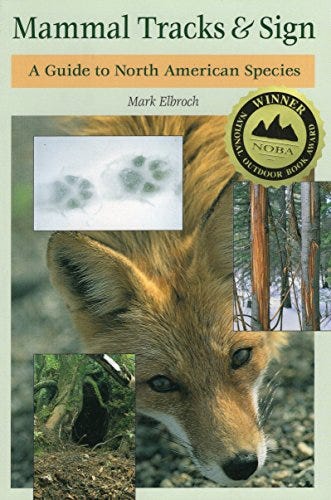
Mark Elbroch extends this lineage of thought in a complementary direction. For him, tracking is not just proto-science; it is ecology alive and breathing. A single track contains the entire architecture of an ecosystem compressed into one transient impression. The tracker reads not only the animal’s gait or weight, but its hunger, its route between food and water, its anxieties, its seasons, its predators, its pleasures. Elbroch speaks of three levels of attention—the intimate or “lying” perspective close to the ground (the Track); the contextual or “standing” perspective of terrain and pattern (The Gait); and the “flying” (Bird’s Eye) perspective where the larger ecological relationships come into view. The tracker learns to oscillate among these states of perception, moving fluidly from fine detail to landscape overview to systemic imagination.
It is remarkable how closely these modes of attention mirror the neuropsychological layers of the human brain described by Paul MacLean: the reptilian, the mammalian, and the neomammalian. Tracking activates our entire evolutionary inheritance, drawing on instinct, relational attunement, and analytical reasoning all at once. Few practices integrate the human mind so completely. And few practices are so absent from our increasingly fractured and disembodied ways of living.
To track well, one must slow down. One must let go of the illusion that life is a stream of data to be consumed rapidly. The land teaches that knowledge comes in whispers, in half-erased signs, in ambiguities. A track is an invitation into uncertainty. The best trackers do not demand clarity; they cultivate an attunement that can move gracefully even when the evidence is faint or conflicting. They tolerate ambiguity with a calm mind. They revise conclusions without defensiveness. They imagine possibilities without becoming unmoored from reality. Tracking, in this sense, refines the very qualities of mind that our era of confusion, polarization, and distraction so desperately lacks.
We live in a time when public consciousness has become profoundly untracked. We are overwhelmed with information but impoverished in meaning. We are flooded with stimuli but starved for attention. Joseph Campbell once said we are living “between stories,” wandering through a demythologized world without a compass. Laurens van der Post warned that civilizations collapse not because the world suddenly becomes unintelligible, but because people lose the capacity to notice the early signs—the “first tracks”—that foretell change. Without the tracker’s mind, we fail to perceive what lies just ahead. We become unable to distinguish signal from noise, significance from spectacle, truth from distraction.


Tracking counters that loss. It trains perception toward the subtle, the relational, the emergent. To read tracks well, one must learn to see the faintest of beginnings—the shift in soil moisture, the partial imprint, the broken grass blade. Such signs, though seemingly insignificant, hold the shape of what is coming. Van der Post lamented that so often humanity only recognizes what is unfolding when it becomes too large, too violent, too late. The Bushmen, by contrast, train themselves to see the future in the smallest of present disturbances. They read the world at a granularity that our culture has forgotten how to perceive.
The problem is not that our technologies are too powerful. The problem is that our perception has grown dull while our tools have grown sharp. We have built a world in which the ancient skills of attention that once guided our evolution have been replaced by the dull hum of automated convenience. Education has mirrored this shift, prioritizing rote memorization, standardized answers, and disembodied analysis. Students learn to pass tests, not to perceive. They learn to recite facts, not to uncover patterns. They learn to look at screens, not landscapes. The tracker’s mind—with its blend of skepticism, curiosity, imagination, and embodied awareness—sits dormant within them, unused and uninvited.
Imagine instead an educational system that returns the origin of science to its rightful place—not as nostalgia, but as innovation. Imagine classrooms where students learn to hypothesize from real-world signs, where they practice the art of inference not from worksheets but from tracking the movements of a fox across a snowy field, or the dispersal patterns of leaves after a storm, or the changing behavior of birds before a shift in weather. Imagine teaching ecological literacy not as a list of terms, but as a living language—a grammar of relationships revealed in real landscapes.
Tracking teaches that the world is intelligible. It also teaches that the world is mysterious. The dance between those truths is what cultivates a mind capable of wisdom. When students learn to track, they learn to hold the world gently, attentively, imaginatively. They learn to be scientists, yes—but also storytellers, poets of perception, citizens of a living world. They learn that every creature moves through its own narrative arc and that this narrative is inscribed subtly across the land. When young people read tracks, they are learning to read both the outer world and their inner one, for the same faculties of awareness guide both pursuits.
The Bushmen have always known this. When Xqamxebe says tracking is talking with God, he does not mean that one hears a voice. He means that in tracking, the boundary between the self and the world dissolves. The tracker enters a larger mind—a mind spacious enough to include the movements of antelope and the behavior of clouds, the patience of predators and the pathways of wind. It is a spiritual ecology, or perhaps an ecological spirituality, where knowledge is not extracted from the world but received from it. In such a state, the human being becomes permeable to meaning. This is not a metaphor; it is a mode of participation in a living cosmos.
We need this now. More than ever. In an era when young people feel increasingly unmoored, anxious, and disconnected, tracking offers not escape but return. It roots attention in the real world, not in algorithmic shadows. It cultivates humility without diminishing confidence. It teaches patience, persistence, and the profound dignity of sustained curiosity. It invites the imagination back into a relationship with evidence. It nourishes the capacity to wonder—something that standardized education cannot manufacture and digital culture cannot sustain.
If we are to find our way out of the dystopian patterns of our age, we must reawaken the ancient human capacity to notice what matters. Tracking offers a pedagogy for precisely that awakening. It trains perception to move fluidly across scales, from intimate detail to broad systems thinking. It cultivates a scientific temperament grounded in humility rather than arrogance. It nurtures ecological literacy not as information, but as relationship. And it restores the mythic imagination that helps human beings locate themselves in narratives larger than their own.
In the end, tracking teaches us that every footprint is a doorway. To follow it is to step into a world that is both familiar and utterly new. It invites us to remember that knowledge is not merely accumulated; it is pursued. It grows through the act of following clues, revising assumptions, and staying attentive to the world as it reveals itself, sign by subtle sign. It reminds us that the stories we seek are already inscribed in the land, waiting for someone with the patience to kneel, look closely, and begin to read.
If we choose to adopt the tracker’s mind again—to bring it into our classrooms, our communities, our ways of seeing—then perhaps we will rediscover the possibilities van der Post feared we had lost. Perhaps science will become human again. Perhaps ecology will become intimate again. Perhaps we will notice the early tracks of better futures before the old paths close behind us forever.
To track is to learn to see.
To see is to begin to understand.
And understanding, when carried by a mind awake to the world, is the beginning of transformation.
I’ve been a dedicated tracker since the 1990s, learning from mentors like Mark E. and Paul Rezendes. In 1997, I began teaching tracking to my public high school students, a practice I continued until my retirement in 2017. Today, I teach college courses at Keene State in New Hampshire, including classes on tracking. I believe K–12 schools hold tremendous potential to cultivate essential social skills, foster creativity and critical thinking, encourage systems thinking, and deepen students’ connections to the natural world. Over time, it is young people who reimagine our place in the biosphere and shape new ways of belonging. For me, tracking offers a uniquely interdisciplinary approach, providing meaningful strategies and scaffolding to support learners in these changing times. I am currently collaborating with a local elementary school to develop strategies for integrating tracking into public K–12 education, with the understanding that approaches must be adapted to fit the needs of rural, suburban, and urban contexts. I hope to work with other teachers/trackers to expand this much needed approach. I think i need to write a book. I hope to read more of your writing which I have been able to access through FB. R. Scott Semmens
Hi! Another CWTA member here! I loved this post. It describes tracking eloquently and simply at the same time. It inspires me to do more of my own writing and sharing of tracking skills.